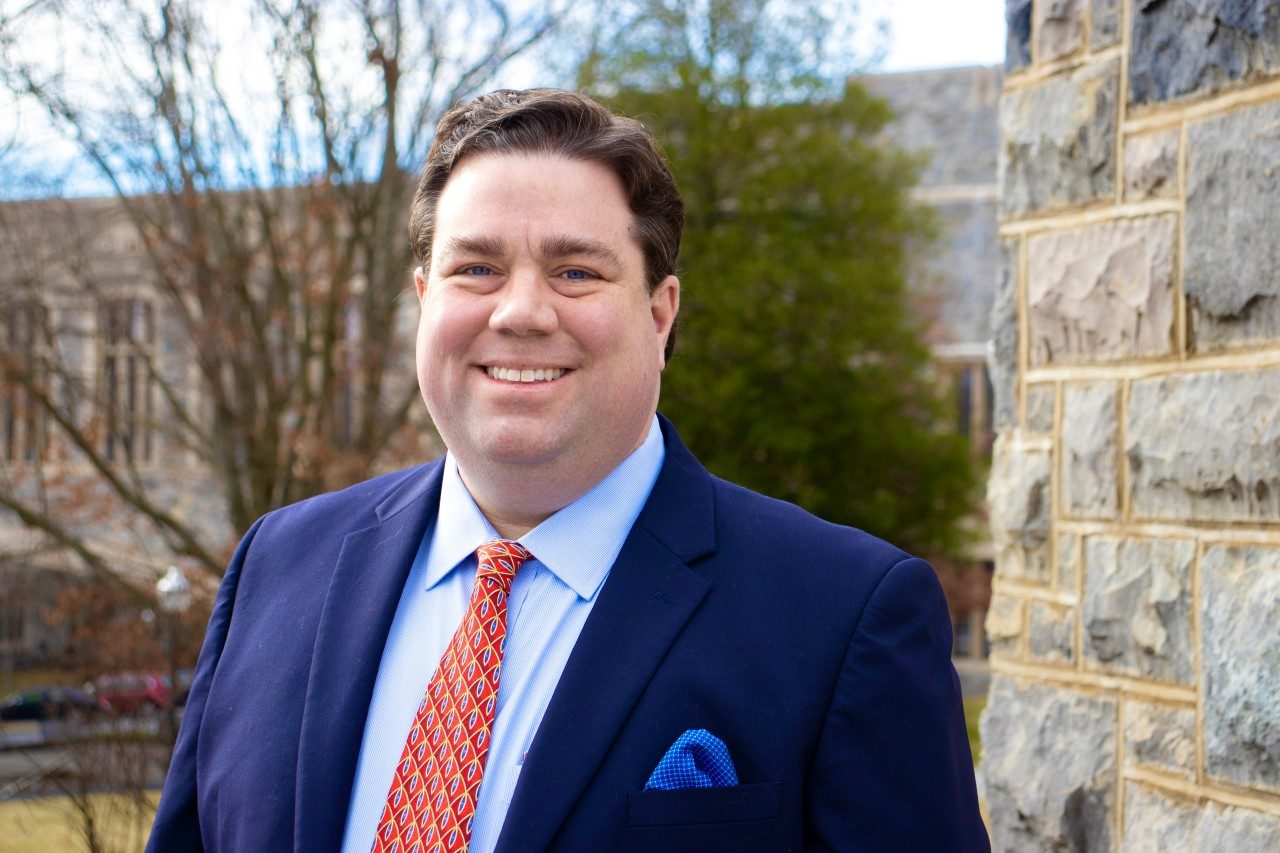
Lindke v. Freed: Many Social-Media-Blocking Cases Will Now Turn on Whether Public Official Possessed Authority to Speak on the State’s Behalf
University of Georgia
The vote this week by the U.S. House of Representatives, by an overwhelming 352-65 margin, could lead to a nationwide ban of the popular social media app TikTok.


Unlike existing work, which relies on training data from social media examples, a new benchmark, named ToxicChat, is based on examples gathered from real-world interactions between users and an AI-powered chatbot. ToxicChat is able to weed out queries that use seemingly harmless language but are actually harmful, which would pass muster with most current models.

The Shahal M. Khan Cyber and Economic Security Institute at AU, CrowdStrike and Wiley Rein launch a new online platform designed to help cybersecurity and privacy professionals, government officials, and students understand the fundamentals of key cybersecurity policy topics and stay up-to-speed on the context, players, history and issues underlying the key cyber public policy issues of the day.

Researchers at the University of Notre Dame conducted a study using AI bots based on large language models and asked human and AI bot participants to engage in political discourse. Fifty-eight percent of the time, the participants could not identify who the AI bots were.

Heightened use of social media during the coronavirus pandemic brought with it an unprecedented surge in the spread of misinformation.

When you try a new restaurant or book a hotel, do you consider the online reviews? Do you submit online reviews yourself? Do you pay attention if they are filtered and moderated? Does that impact your own online review submissions?

Gone are the days when the tell-tale signs of a ‘phishing’ scam were fairly easy to spot, SMU cybersecurity experts warn: Hackers are increasingly using generative AI (artificial intelligence) to write more convincing emails and bogus advertisements.

Overdose deaths in North America have skyrocketed, primarily because of the spread of illegally manufactured fentanyl. In a new study, researchers analyzed an early and prominent fentanyl-selling operation on the dark web.
Social media has become one of the main sources of information for youth, a population that on average engages with platforms such as TikTok and Instagram for nearly five hours per day.


The latest articles on occupational medicine, workplace culture, and the labor market are in the "In the Workplace" channel on Newswise.

For many people, the holiday season is a time to giveback. It’s also the time of year when scammers ramp up their efforts to take advantage of your goodwill to steal your hard earned money.

The trial of Sam Bankman-Fried, founder of failed cryptocurrency exchange FTX, is underway in New York. Some are calling his crimes one of the biggest financial frauds in decades. The 31-year-old former crypto mogul is charged with orchestrating a conspiracy to use $10 billion that FTX’s customers had entrusted to him for venture capital investments, political donations and luxury real estate purchases.

Russian scientists have developed an approach to training models for sentiment analysis of Internet texts. Such models determine whether text expresses the author’s positive or negative attitude towards a particular issue.

Title 42, the United States pandemic rule that had been used to immediately deport hundreds of thousands of migrants who crossed the border illegally over the last three years, has expired. Those migrants will have the opportunity to apply for asylum. President Biden's new rules to replace Title 42 are facing legal challenges. Border crossings have already risen sharply, as many migrants attempt to cross before the measure expires on Thursday night. Some have said they worry about tighter controls and uncertainty ahead. Immigration is once again a major focus of the media as we examine the humanitarian, political, and public health issues migrants must go through.
Researcher will discuss the study which involved a sleeping aid known as suvorexant that is already approved by the Food and Drug Administration (FDA) for insomnia, hints at the potential of sleep medications to slow or stop the progression of Alzheimer’s disease.

People around the globe are so dependent on the internet to exercise socio-economic human rights such as education, healthcare, work, and housing that online access must now be considered a basic human right, a new study reveals.

Researchers explain why 10 to 13 is a critical age to support youth in their use of tech–and what tech companies can do to improve wellbeing and online safety for middle-school-aged youth.
Here are some of the latest articles that have been added to the Behavioral Science channel on Newswise, a free source for journalists.


U.S. schools and school districts have shared an estimated 4.9 million posts that include identifiable images of students on public Facebook pages, unintentionally putting student privacy at risk, according to a new study.
The latest research news in Climate Science on Newswise.

Expert Q&A: Do breakthrough cases mean we will soon need COVID boosters? The extremely contagious Delta variant continues to spread, prompting mask mandates, proof of vaccination, and other measures. Media invited to ask the experts about these and related topics.
Russia's ever-tightening grip on its citizens' internet access has troubling implications for online freedom in the United States and other countries that share its decentralized network structure, according to a University of Michigan study.
Rural counties continue to rank lowest among counties across the U.S., in terms of health outcomes. A group of national organizations including the Robert Wood Johnson Foundation and the National 4-H Council are leading the way to close the rural health gap.
Leaders in digital technology, education, business, and city governance gathered in El Segundo Dec. 14 for Los Angeles County Economic Development Corporation’s (LAEDC) Future Forums: Cyber Security to address society’s increasing vulnerability to cyber threats.
In their paper, “The Economics of Network Neutrality,” Ben Hermalin, Haas Economics Analysis and Policy Group,and Nicholas Economides, Berkeley-Haas visiting professor from NYU'S Stern School of Business, find that if Internet Service Providers known as ISPs initiate price discrimination in their pricing, a “recongestion effect” will occur. In other words, online delivery channels that are less congested at the onset of new pricing tiers will eventually become recongested when consumer behavior adjusts.
Low-income city residents learn to use broadband through public programs, but they will not get home broadband until it costs less -- and government must help make that happen, says a UIC professor to the Federal Communications Commission.
According to some estimates, the average corporate email user sends 112 emails every day. About one out of every seven of those messages, says a new study from Georgia Tech, can be called gossip. Assistant Professor Eric Gilbert of the School of Interactive Computing examined hundreds of thousands of emails from the former Enron corporation and found that 14.7 percent of the emails qualify as office scuttlebutt.
The Internet and social media have opened up new vistas for people to share preferences in films, books and music. Services such as Spotify and the Washington Post Social Reader already integrate reading and listening into social networks, providing what Facebook CEO Mark Zuckerberg calls “frictionless sharing.” “But there’s a problem. A world of automatic, always-on disclosure should give us pause,” says Neil M. Richards, JD, privacy law expert and professor of law at Washington University in St. Louis.
Although use of the internet has been credited with helping spur democratic revolutions in the Arab world and elsewhere, a new multinational study suggests the internet is most likely to play a role only in specific situations.
Stephen B. Wicker, Cornell University professor of electrical and computer engineering, comments on obsolete federal data privacy laws. He conducts research on wireless information networks, and focuses on networking technology, law, sociology, and how regulation can affect privacy and speech rights. He is the author of “Cellular Convergence and the Death of Privacy,” a book to be published by Oxford University Press at the end of 2012.
 RSS
Medicine keyboard_arrow_right
Sciencekeyboard_arrow_right
Life keyboard_arrow_right
Business keyboard_arrow_right
Journal News keyboard_arrow_right
By Location keyboard_arrow_right
Meetings, Grants, and Events keyboard_arrow_right
RSS
Medicine keyboard_arrow_right
Sciencekeyboard_arrow_right
Life keyboard_arrow_right
Business keyboard_arrow_right
Journal News keyboard_arrow_right
By Location keyboard_arrow_right
Meetings, Grants, and Events keyboard_arrow_right