Digital Science has launched its Open Principles, a new initiative that commits its research information solutions to open science now and into the future.
Digital Science, a technology company serving stakeholders across the research ecosystem, is pleased to share the news that University College London (UCL) has launched a new public profiles system, UCL Profiles, powered by Symplectic Elements.
A new field of forensics is being proposed by research integrity experts to recognize their investigations into unscrupulous research behavior and misuse of scholarship: Forensic Scientometrics.
Scott Armstrong, MD, PhD, has been named senior vice president for drug discovery and chief research strategy officer at Dana-Farber Cancer Institute. In this new role, he will lead Dana-Farber's institutional research strategy with an initial focus on therapeutic discovery work.
Genetic testing has become a more common way to diagnose and manage many neurologic conditions including dementia, Parkinson’s disease and epilepsy, but a new study has found not everyone may have the same level of access to these tests. Black people were half as likely as white people to be evaluated for genetic testing, according to a study published in the March 6, 2024, online issue of Neurology®, the medical journal of the American Academy of Neurology.
University Hospitals (UH) has received the 2024 World’s Most Ethical Companies® recognition by Ethisphere, a global leader in defining and advancing the standards of ethical business practices. The health system has been recognized 12 times since 2012 and is one of only four honorees in the Healthcare Providers industry. This year, 136 honorees were recognized spanning 20 countries and 44 industries.
Many of Finland’s newly established wellbeing services counties are looking to cut costs in eldercare services, especially in round-the-clock care and home care.
Two University Hospitals physician-scientists will receive recognition for their profound contributions to advancing clinical research. UH is the only hospital system to have two honorees acknowledged this year by the Clinical Research Forum for the 10 most significant clinical advancements impacting the health and wellness of humanity.
Diverse research is more impactful in the business management field, with female influence growing stronger in the past decade, finds a new study from the University of Surrey.
Saint Louis University’s Liz Chiarello, Ph.D., associate professor of sociology recently published an article in the American Sociological Review, the flagship journal of the American Sociological Association. The article explores pharmacists’ use of prescription drug monitoring programs (PDMPs) and the ethical and practical application of PDMPs in healthcare.
In 2017, the company Eternime aimed to create an avatar of a dead person using their digital footprint, but this “Skype for the dead” didn’t catch on. The machine-learning and AI algorithms just weren’t ready for it. Neither were we.
With the rise in machine learning applications and artificial intelligence, it's no wonder that more and more scientists and researchers are turning to supercomputers. Supercomputers are commonly used for making predictions with advanced modeling and simulations. This can be applied to climate research, weather forecasting, genomic sequencing, space exploration, aviation engineering and more.
The Environmental Molecular Sciences Laboratory (EMSL), a Department of Energy Office of Science user facility, has an exceptionally large number of these powerful instruments. They have more than 200 different instruments available for researchers to use for free. To get access to these tools, a researcher submits a proposal for time on the equipment. Other scientists review this and other proposals and choose the strongest ones.
In recent years, clinical trial reports in major urology journals have been more likely to include data on harmful effects of treatments, reports a study in the January issue of The Journal of Urology®, an Official Journal of the American Urological Association (AUA). The journal is published in the Lippincott portfolio by Wolters Kluwer.
In a study evaluating the bias in OpenAI's CLIP, a model that pairs text and images and operates behind the scenes in the popular DALL-E image generator, University of Michigan researchers found that CLIP performs poorly on images that portray low-income and non-Western lifestyles.
Digital Science is pleased to announce that Louisiana State University Health Shreveport (LSUHS) has chosen Dimensions Analytics and Dimensions Research Security from Digital Science’s flagship products to advance its world-class research programs.
The world’s total population is expected to reach 9.9 billion by 2050. This rapid increase in population is boosting the demand for agriculture to cater for the increased demand. Below are some of the latest research and features on agriculture and farming in the Agriculture channel on Newswise.
The by-product of financial advice, known as a Statement of Advice (SOA), serves as a written documentation of financial guidance provided to consumers. Its primary purpose is to ensure accountability for regulatory compliance and consumer protection, as outlined in the Corporations Act (2001) of Australia. However, due to the intricate nature of mandatory disclosure requirements, SOA documents tend to be extensive and pose challenges in both their creation and comprehension by consumers. Indeed, recent studies have indicated a decline in the recording of consumer relationships within the Australian financial practice.
RUDN University psychologists have developed a questionnaire to determine how students feel about digital educational technologies. It is one of the first such scales in Russia.
The dependence between biomechanical properties of extracellular matrix and the development of tumor cells inside it was proven by scientists. This will allow to create more realistic models for studying growth of cancer tumors and metastases.
Congratulations to a #UWF graduate team for placing first and an undergraduate team for placing second at the HR Conference Student Case Competition that was held during the annual HR Florida Leadership Conference in Orlando.
The Financial Times and Stephen M. Ross School of Business at the University of Michigan are partnering on a new monthly poll to track how American voters perceive financial and economic issues in the lead up to the 2024 U.S. presidential election.
Cornell Tech has announced a total of more than $10 million in gifts and grants from the Simons Foundation and the National Science Foundation, respectively, to support arXiv, a free distribution service and open-access archive for scholarly articles.
The University of Utah is launching a new research initiative focused on AI that aims to responsibly use advanced AI technology to tackle societal issues. President Taylor Randall announced a $100 million investment in the newly created Responsible AI Initiative that will advance AI, led by the U’s Scientific Computing and Imaging Institute.
Multiomics3 analysis that integrates different layers of profiles altogether is challenging, since the number of variables in profile substantially differ from each other. For instance, gene expression profile and genomic DNA methylation profile are often analyzed together, however, there are only tens of thousands of genes, whereas the number of DNA methylation sites are as many as tens of millions.
The Association for Psychological Science calls on Congress to promptly fund the US government for the coming fiscal year to sustain important scientific programs and initiatives.
Anesthesiology researchers are responsible for some of medicine’s most significant advances, from the Apgar score that tests a newborn’s health to cardiopulmonary resuscitation (CPR). But the number of medical residents in the anesthesiology physician-scientist (researcher) pipeline trails other specialties, particularly among women, according to findings of the Anesthesia Research Council (ARC), published in the journal Anesthesia & Analgesia.
In response to the COVID-19 pandemic, research on coronaviruses and other harmful pathogens has increased in laboratories across the world – and not just any labs.
Findings show how storytelling narratives of individuals’ experiences often leave out broader public health, socioeconomic and environmental contexts, which can be crucial for building empathy and influencing policy decisions.
This method produced enrollment rates many times higher than is typically seen for patient portal based recruitment – and unexpectedly increased racial and ethnic participation as well. So it could be a promising new tool to improve research recruitment and diversity in biomedical research.
Do researchers overestimate the risk that certain research findings will fuel public support for censorship, defunding, and other harmful actions? Findings from a pair of studies published in Psychological Science by authors Cory J. Clark (University of Pennsylvania), Maja Graso (University of Groningen), Ilana Redstone (University of Illinois Urbana-Champaign), and Philip E. Tetlock (University of Pennsylvania).
Who’s responsible for upholding research integrity, mitigating misinformation or disinformation and increasing trust in research? Everyone – even those reporting on research – says a new article published by leading research integrity experts.
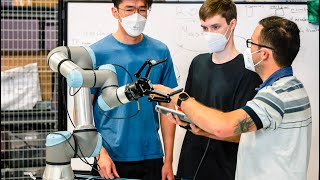
Argonne National Laboratory is reimagining the lab spaces and scientific careers of the future by harnessing the power of robotics, artificial intelligence and machine learning in the quest for new knowledge.
Scientific journals and research papers are evaluated by a metric known as their “impact factor,” which is based on how many times a given paper is cited by other papers. However, a new study from MIT and other institutions suggests that this measure does not accurately capture the impact of medical papers on health outcomes for all patients, particularly those in low- or middle-income countries.
As the virus that caused the COVID-19 pandemic first began to spread around the planet, it brought along a new vocabulary. Unfamiliar phrases like “flatten the curve,” “COVID pod” and “essential worker” infected regular conversation. But another — “do your own research” — was already well-known to Sedona Chinn, who studies misinformation and health communications.
Created by The University of Texas at El Paso, the U.S.-Mexico Faculty Collaboration Fellowship program will support research projects with higher education institutions in the State of Chihuahua to spur studies on issues that impact the lives of people throughout the Paso del Norte region.
It's that time of year again. For media working on stories about the seasonal return to school, here are the latest features and experts in the Back-To-School channel on Newswise.
IIASA researchers and experts at the World Health Organization (WHO) have conducted a systematic review of health and wellbeing-related indicators, as well as citizen science initiatives, to explore the potential of citizen science for mobilizing action toward the achievement of health and wellbeing related targets of the Sustainable Development Goals (SDGs) and the WHO’s Triple Billion Targets.
The U.S. Department of Energy (DOE) announced $37 million in funding for 52 projects to 44 institutions which include Argonne projects. The funding will help build research capacity, infrastructure and expertise at institutions historically underrepresented.
Researchers are more likely to pen scientific papers with co-authors of the same gender, a pattern that cannot be simply explained by the varying gender representation across scientific disciplines and time, according to joint research from Cornell University and the University of Washington.
The Department of Energy's Environmental Molecular Sciences Laboratory (EMSL) has launched the Data Transformations Integrated Research Platform to help researchers transform their scientific data into more manageable sets of information, improve data accessibility and reproducibility, and facilitate the creation of models and visualization tools that help tell a larger story from the data.
Community-based participatory research (CBPR) is an approach that connects academic researchers with community partners to inform project development. A new study from the University of Illinois Urbana-Champaign and collaborators explores CBPR implementation in a project on criminal justice reform in Cincinnati.
Today, the U.S. Department of Energy (DOE) announced $13.1 million in funding for 17 new projects to universities, academic institutions, federal research labs, and nonprofits, within the area of Environmental System Science (ESS) research. Awards focus on measurements, experiments, field data, modeling, and synthesis to provide improved understanding and representation of ecosystems and watersheds in ways that advance the sophistication and capabilities of models that span from individual environmental processes to Earth-system scales.
Data from 2000 to 2020 indicate that women researchers are now equally likely as their male peers to be awarded grant funding, to have their journal articles accepted for publication, and to receive strong letters of recommendation. They are more likely than men to be hired for tenure-track positions. But the findings have caveats.
The Research Corporation for Science Advancement (RCSA) has chosen Symplectic Grant Tracker from Digital Science’s suite of flagship products to advance its aims of providing catalytic funding for innovative scientific research.




 RSS
RSS