Working-Age Caregivers of Stroke Survivors: Needs, Concerns, and Quality of Life
Association of Rehabilitation Nurses


Greg Rouse, a marine biologist at UC San Diego’s Scripps Institution of Oceanography, and other researchers have discovered a new species of deep-sea worm living near a methane seep some 50 kilometers (30 miles) off the Pacific coast of Costa Rica. Rouse, curator of the Scripps Benthic Invertebrate Collection, co-authored a study describing the new species in the journal PLOS ONE that was published on March 6.

A technique originally devised to extract DNA from woolly mammoths and other ancient archaeological specimens can be used to potentially identify badly burned human remains, according to research from Binghamton University, State University of New York.

Researchers at Washington University School of Medicine in St. Louis have found that brain cell activity during sleep is responsible for propelling fluid into, through and out of the brain, cleaning it of debris.

An international research team reports the discovery of Homo sapiens fossils from the cave site Ilsenhöhle in Ranis, Germany. Directly dated to approximately 45,000 years ago, these fossils are associated with elongated stone points partly shaped on both sides (known as partial bifacial blade points), which are characteristic of the Lincombian-Ranisian-Jerzmanowician (LRJ).
'Millennials don't really want to work. They're far too focused on avocado toast and chai lattes!' Just one of the many clichés expressed by workers over the age of fifty.
Being more forgiving of your own shortcomings in a romantic relationship can lead to happier couples.
Ever wonder what kind of TV shows your dog might choose if they could work the remote control? New research from the University of Wisconsin–Madison’s School of Veterinary Medicine provides some answers, but the study was more interested in solving a longstanding problem in veterinary medicine than turning canine companions into couch potatoes.
In a meta-analysis of 5,000 participants, including more than 500 who underwent in-person assessments over two years, multivitamins showed benefits for memory and global cognition.
According to new research published ahead of print in the American Journal of Physiology-Regulatory, Integrative and Comparative Physiology, breathing through the nose leads to several benefits, including lower blood pressure and other factors that could predict heart disease risk. The study was chosen as an APSselect article for January.

Christian Nolen usually plays guitar on stage, but the professional guitarist recently underwent an open craniotomy and played notes from Deftones songs while a neurosurgical team worked to remove a tumor (glioma) from his brain. B-roll is available.

Douglas Boin, Ph.D., a professor of history at Saint Louis University, made a major announcement at the annual meeting of the Archeological Institute of America, revealing he and his team discovered an ancient Roman temple that adds significant insights into the social change from pagan gods to Christianity within the Roman Empire.

Major cities on the U.S. Atlantic coast are sinking, in some cases as much as 5 millimeters per year – a decline at the ocean’s edge that well outpaces global sea level rise, confirms new research from Virginia Tech and the U.S. Geological Survey. Particularly hard hit population centers such as New York City and Long Island, Baltimore, and Virginia Beach and Norfolk are seeing areas of rapid “subsidence,” or sinking land, alongside more slowly sinking or relatively stable ground, increasing the risk to roadways, runways, building foundations, rail lines, and pipelines, according to a study published today in the Proceedings of the National Academies of Sciences.

WCS (Wildlife Conservation Society) released today its 17 favorite animal images of 2023 from its field work across the world and its zoos and aquarium in New York City
New research, publishing December 21st in the open access journal in PLOS Biology, shows that tears from women contain chemicals that block aggression in men.

All dog owners think that their pup is special. Science now has documented that some rare dogs are…even more special! They have a talent for learning hundreds of names of dog toys.

Patients with a history of suicidality experience increased risk in the days surrounding menstruation

Observations in mice hint at role of daydreams in remodeling the brain

Babies as young as four months old can sense the space around them and understand how their bodies interact with it. This ability is known as peripersonal space.
Comprehensive systematic review of 25 studies over nearly 50 years reveals consistent evidence of associations between insecticide exposure and lower sperm concentration

Researchers found that when states implement medical cannabis laws, there is a 0.5 to 1.5 percentage point decrease in regular to frequent (up to or greater than once per week on average) nonmedical prescription opioid use among people who reported using opioids in the previous year.

Engineers at Binghamton University, State University of New York have programmed a robot guide dog to assist the visually impaired. The robot responds to tugs on its leash.

Trigger warnings are designed to help people avoid or emotionally prepare for encountering disturbing content. But those warnings heighten distress rather than alleviate it, a new research analysis shows.
Third-grade retention can increase the reading and math scores of struggling students, with positive effects lasting into middle school, according to new research released today.

The nuclear reactions that power stellar explosions involve short-lived nuclei that are hard to study in the laboratory. Researchers used a combination of methods to measure a reaction where a neutron from a deuterium target is exchanged with a proton from a radioactive projectile, a reaction equivalent to a process in exploding stars.
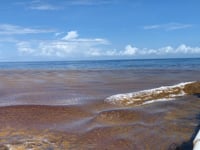
Under normal conditions, the floating macroalgae Sargassum spp. provide habitat for hundreds of types of organisms. However, the Great Atlantic Sargassum Belt (GASB) that emerged in 2011 has since then caused unprecedented inundations of this brown seaweed on Caribbean coastlines, with harmful effects on ecosystems while posing challenges to regional economies and tourism, and concerns for respiratory and other human health issues.

A new study of the microbial ecosystem in sourdough finds that using different types of flour fosters distinct bacterial communities, and that these differences contribute to the variation of sourdough aromas and flavors.

Killer whales are some of the oceans’ top predators, but even they can be exposed to environmental pollution. In the largest study to date on North Atlantic killer whales, researchers in ACS’ Environmental Science & Technology report the levels of pollutants in 162 individuals’ blubber.

New analysis of the remains of victims of the 1918 influenza pandemic, which killed an estimated 50 million people worldwide, contradicts the widespread belief the flu disproportionately impacted healthy young adults.
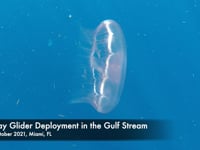
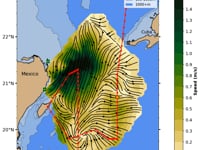
The Gulf Stream is intrinsic to the global climate system, bringing warm waters from the Caribbean up the East Coast of the United States. As it flows along the coast and then across the Atlantic Ocean, this powerful ocean current influences weather patterns and storms, and it carries heat from the tropics to higher latitudes as part of the Atlantic Meridional Overturning Circulation. A new study published today in Nature Climate Change now documents that over the past 20 years, the Gulf Stream has warmed faster than the global ocean as a whole and has shifted towards the coast. The study, led by Robert Todd, a physical oceanographer at the Woods Hole Oceanographic Institution (WHOI), relies on over 25,000 temperature and salinity profiles collected between 2001 and 2023.

When we’re married or in a long-term romantic relationship, we may eventually come to take each other for granted and forget to show appreciation. A new study from the University of Illinois Urbana-Champaign finds that it doesn’t have to stay this way. The study examined why perceived gratitude from a spouse or romantic partner changes over time, and whether it can be improved through relationship intervention programs.

Hackensack Meridian Health’s Men’s Health Day offers screenings for those at high risk for prostate cancer & other diseases.

One treatment each of two psychedelic drugs lowered depression and anxiety and improved cognitive functioning in a sample of U.S. special operations forces veterans who sought care at a clinic in Mexico, according to a new analysis of the participants’ charts.

Research led by psychologists at the University of Warwick has revealed a profound connection between the spirituality of science and positive wellbeing, much like the benefits traditionally associated with religion.
A new study conducted in a lab – with follow-up human breath tests being planned – showed that whole milk plain yogurt prevented almost all of the volatile compounds responsible for garlic’s pungent scent from escaping into the air.
The study across three countries led by the Department of Psychology’s Dr Paul Hanel discovered people who prioritised achievement over enjoyment were less happy on the next day.

People who bought firearms during the height of the COVID-19 pandemic have much higher rates of recent suicidal thoughts, self-harm behaviors, and intimate partner violence, a new study suggests, compared with other firearm owners and people who do not own firearms.

Carbon-bearing molecules have been discovered in the atmosphere of the habitable zone exoplanet K2-18 b by an international team of astronomers using data from the NASA’s James Webb Space Telescope. These results are consistent with an exoplanet that may contain ocean-covered surface underneath a hydrogen-rich atmosphere. This discovery provides a fascinating glimpse into a planet unlike anything else in our Solar System, and raises interesting prospects about potentially habitable worlds elsewhere in the Universe.

Cannabis therapy also linked to improvements in anxiety, depression, and pain levels—though no changes in sleep disturbance levels reported.

A Neptune-sized planet denser than steel has been discovered by an international team of astronomers, who believe its composition could be the result of a giant planetary clash.
It is increasingly common for people to discuss mental health challenges on social media platforms, but a new study finds these disclosures can affect the way potential employers view job applicants.

Insights could impact approach to managing and preventing condition in children.

Millions of Americans were exposed to SARS-CoV-2, the virus that causes COVID-19, early in the pandemic but could not get diagnosed due to testing limitations. Many of those people developed a post-viral syndrome with symptoms similar to those of long COVID.

In a new study published by the journal Risk Analysis, scientists at Iowa State University calculate the annual probability of a mass shooting in every state and at public places such as shopping malls and schools. Their new method for quantifying the risk of a mass shooting in specific places could help security officials make informed decisions when planning for emergency events.

When a sabertooth tiger called out, what noise did it make – a mighty roar or a throaty purr? A new study from North Carolina State University examined the data behind the arguments for each vocalization and found that the answer was more nuanced than they thought – and that it could depend on the shape of a few small bones.

Cultivated autologous limbal epithelial cells (CALEC) transplant, in which stem cells from the healthy eye and transplanted into the injured eye, for significant cornea injuries was found safe and led to gains in preliminary phase I clinical trial.
Spectacles that are marketed to filter out blue light probably make no difference to eye strain caused by computer use or to sleep quality, according to a review of 17 randomised controlled trials of the best available evidence so far.
A team of researchers, including NOIRLab astronomer André-Nicolas Chené, has found a highly unusual star that has the most powerful magnetic field ever found in a massive star — and that may become one of the most magnetic objects in the Universe: a variant of a neutron star known as a magnetar. This finding marks the discovery of a new type of astronomical object — a massive magnetic helium star — and sheds light on the origin of magnetars.

Un equipo de investigadores, que incluía al astrónomo de NOIRLab André-Nicolas Chené, descubrió una inusual estrella con el campo magnético más poderoso jamás encontrado en una estrella masiva, que podría convertirla en uno de los objetos más magnéticos de todo el Universo, es decir, una variante de una estrella de neutrones conocida como “magnétar”. El hallazgo marca el descubrimiento de un nuevo tipo de objeto astronómico, una estrella de helio magnética masiva, y provee información sobre el origen de los magnétares.
 RSS
Medicine keyboard_arrow_right
Sciencekeyboard_arrow_right
Life keyboard_arrow_right
Business keyboard_arrow_right
Journal News keyboard_arrow_right
By Location keyboard_arrow_right
Meetings, Grants, and Events keyboard_arrow_right
RSS
Medicine keyboard_arrow_right
Sciencekeyboard_arrow_right
Life keyboard_arrow_right
Business keyboard_arrow_right
Journal News keyboard_arrow_right
By Location keyboard_arrow_right
Meetings, Grants, and Events keyboard_arrow_right